 |
|
|
|
On the 1962 RAC Rally there were two Sunbeam Harrington
Le Mans taking part. Journalist and historian Graham Gauld was
co-driver in one of them.
|
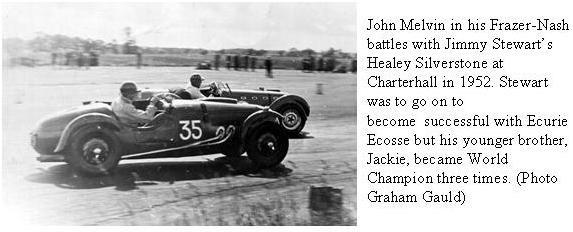
| Prior to all of this, another Scot, George
Murray-Frame whose family ran a large up-market tobacco emporium
in Glasgow was keen on Sunbeam Talbots. George was nominated
as a factory driver for Rootes and was a regular member of the
team in Alpine rallies and the like, driving the original Sunbeam
Alpine. However, this story has to do with John Melvin who, in 1962, contacted George Hartwell who co-operated with Thomas Harrington the coachbuilders. A red model was duly delivered to Scotland in time for John to compete in the International Scottish Rally in June that year. He took with him his usual co-driver, W Gordon Bennett but they had a miserable time on the rally eventually retiring when they soaked the electrics on one of those fiendish Scottish water splashes where the water was allowed to flow freely across the road after heavy rain. John, however, was using this as a preparatory event before the RAC Rally in November 1962 where he again entered his Harrington Le Mans with Gordon Bennett as his co-driver. Also competing from Scotland in that event was a young farmer called Andrew Cowan who was probably one of Rootes' most loyal private entrants. Andrew was driving his Sunbeam Rapier on the event and his talent was obvious to those of us in the business of motor sport in Scotland at that time. We were scornful of his devotion to Rootes and when he was tentatively offered a BMC factory drive he turned it down as he secretly wanted to be a factory driver for Rootes. His chance came not long afterwards when Rootes put him as co-driver to the Rev. Rupert Jones on the Monte Carlo Rally in a factory Hillman Imp. Poor Andrew felt frustrated as the co-driver but he was quickly given a full factory drive and of course crowned his career by winning the 1968 London-Sydney-Marathon in a Hillman Hunter |
|
But back to our story.
|
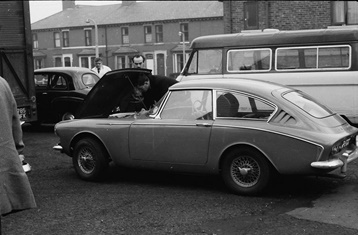
| John Melvin's Harrington Le Mans 2 EGG in Blackpool being prepared for the 1962 RAC Rally. (Photo Graham Gauld) |
|
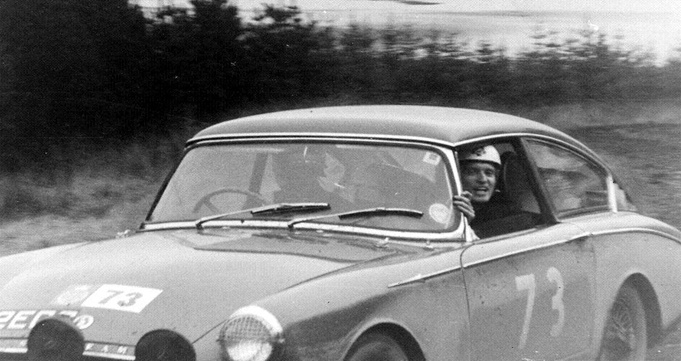
It was the first time I had ridden in a Harrington Le Mans and I found it very comfortable and, thanks to it having a closed coupe body, slightly stiffer with less of the scuttle shake you could get in a normal Sunbeam Alpine on rough roads.
|
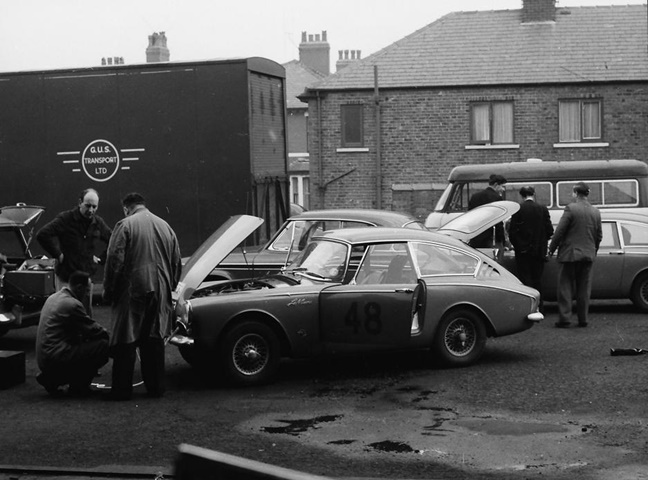
| The Peter Pilsworth Harrington Le Mans before the start of the RAC Rally. In the background is the Melvin car with Alan Frazer on the right and the tall John Melvin on the left )photo Graham Gauld) |
|
It was ironic that two Harrington Le Mans competed on the same event; both were red, both were co-driven by Editors of motoring magazines, both of whom were Scots and had the initials GG. Confusing? You bet
.
|
|
When we arrived in Scotland John Melvin and I felt more confident as we knew most of the highland roads like the back of our hand. Up to then the forestry roads had been very rough and this was typical of that time because this was new to the Forestry Commission to give access to their forest roads but they did nothing to grade the roads. A year later the Commission realized that as each competitor was paying them a levy for every mile covered it was a good little money earner. As a result the Commission was to use metal graders on many of the forest stages which made life a bit easier and less damaging to the cars.
|
|
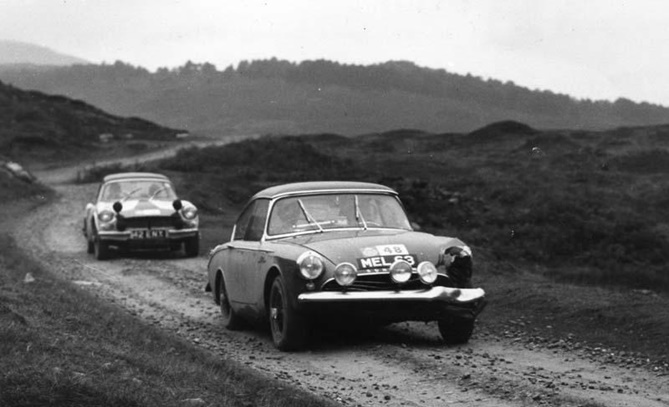
Scotland proved to be not a happy place for us because on one of the early stages we hit a rock at high speed and both rear shock absorbers collapsed leaving us dragging the tail along until the Rootes mechanics set them up again at the end of the stage. Andrew Cowan and Brian Coyle had worse luck as they went off and hit a tree to retire on the spot.
|
|
|
|
For the Scots on the RAC the stage controller at Ordequish was the late Kenny McLennan who was a regular Monte Carlo Rally competitor. This stage, however, was new to everyone. Kenny was the starter and when we arrived he leaned in the car window and said, "Now lads we have to have a good performance on this stage. Once you get past the first four corners it plunges straight downhill for about three quarters of a mile so don't be tempted to lift off. At the bottom the right hand corner is quite open"
|
|
Biography
|
 ©2022 - All rights reserved -
 |